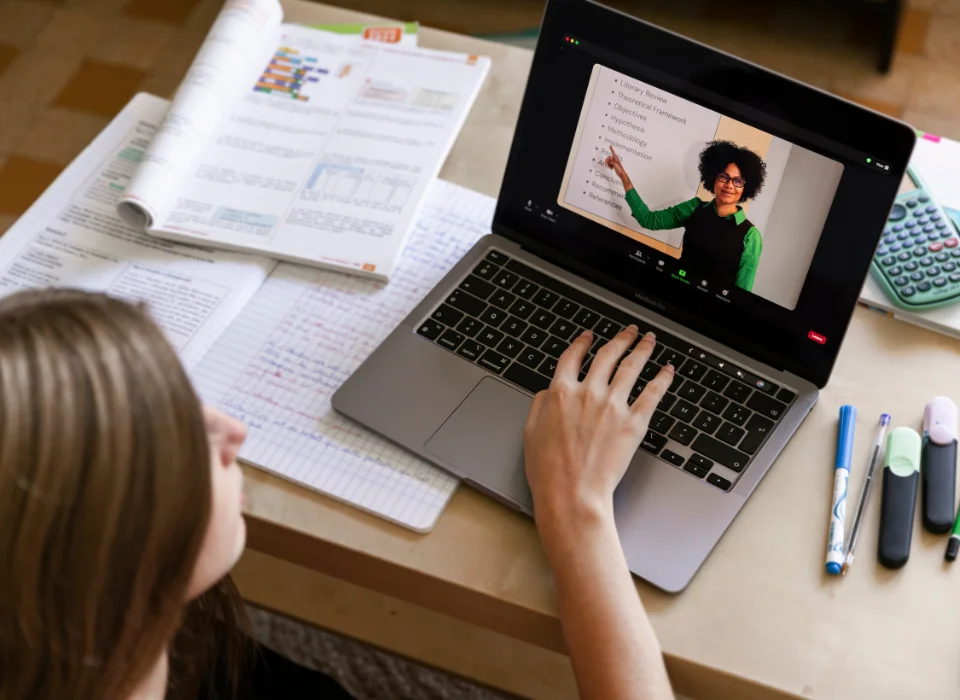
Small group online classes are becoming increasingly popular as they combine the personalized attention of one-on-one tutoring with the collaborative benefits of group learning. Unlike large virtual classrooms, small groups foster meaningful interaction between students and teachers while still allowing individual needs to be met. Small group formats are especially valuable for building confidence, as students feel supported by peers while still benefiting from teacher guidance.
Criteria | Small Group Classes | One-to-One Classes | Large Cohort Classes |
Typical Class Size | 3–8 students | 1 student | 15–100+ students |
Level of Individual Attention | High, shared among few | Maximum, fully personalised | Limited, often generalised |
Peer Interaction & Discussion | Strong collaboration and idea exchange | None | Moderate, but less structured |
Learning Pace Flexibility | Moderately flexible | Fully customised | Fixed pace for majority |
Cost Per Student | Moderate | Highest | Lowest |
Accountability | Strong (visible participation) | Very strong (direct focus) | Lower (easy to blend in) |
Confidence Building | High (practice in safe group setting) | High (private confidence) | Varies; can feel intimidating |
Networking & Social Learning | Meaningful peer bonding | None | Broad but less personal connections |
Best For | Skill development, language learning, exam prep | Targeted improvement, remedial support | Lectures, foundational theory, mass delivery |

This small-group singing class (2–4 learners) helps young students build confidence, strengthen vocal skills, and enjoy performing in a supportive environment. Each session begins with playful warm-ups such as breathing exercises, tongue twisters, sirens, and scales to develop healthy vocal technique. Students then learn a short, manageable section of a song through guided repetition, using live ukulele or piano accompaniment or a sing-along track. Songs may include selections from Disney, musicals, classic rock, and kid-friendly pop. Learners practice melody, rhythm, and clear lyric delivery, with opportunities to sing solo during class. With over 20 years of teaching experience, the instructor provides positive, encouraging guidance that helps children feel comfortable and capable as they take important first steps in their musical journey.
This weekly small-group vocabulary class helps students expand their academic language skills by mastering 10 SAT/ACT-level words per session. Limited to eight learners, the class provides interactive, in-depth exploration of each word’s definition, pronunciation, part of speech, etymology, synonyms, antonyms, and real-world usage. Lessons begin with an engaging warm-up, followed by guided analysis and discussion to deepen understanding. Students reinforce learning through interactive review activities and creative sentence-building challenges designed to promote retention and application. Access to Quizlet flashcards and games supports practice outside of class. Each week features a new set of words, allowing students to join at any time while continuously building vocabulary. This structured yet engaging environment strengthens reading comprehension, writing precision, and standardized test readiness.
This once-weekly small-group English class for grades 6–8 uses Scholastic Scope’s engaging digital literary magazine to build reading, writing, grammar, and speaking skills. Students read assigned articles before class and come prepared for guided discussion, comprehension analysis, and skill-based activities. Each monthly issue includes fiction, nonfiction, plays, debates, grammar practice, and paired texts, allowing learners to explore diverse genres while strengthening vocabulary and critical thinking. Articles are available at multiple reading levels, and audio versions support varied learning needs. Tuition includes digital magazine access and all instructional resources, with no additional materials required. Supplemental enrichment activities reinforce learning beyond class time. This interactive, academically rigorous environment fosters confident communication and a deeper appreciation for literature and language.
This small-group math support class is designed for learners who need clear explanations, structured guidance, and extra practice with foundational skills. Each week focuses on essential topics such as addition, subtraction, multiplication, division, place value, fractions, and word-problem strategies. Lessons include step-by-step modeling, guided practice, visual supports, and short fluency-building games to reinforce understanding. The pace is supportive and responsive, creating a low-stress environment where students can ask questions and build confidence. Strategies are taught to help learners approach math problems with clarity and reduced frustration. By participating regularly, students strengthen core skills, improve accuracy and fluency, and develop greater independence in problem-solving. This class is ideal for learners who benefit from targeted intervention and consistent encouragement.
This weekly small-group AMC 8 preparation class is designed for motivated students in grades 5–8 who want to strengthen competition-level problem-solving skills. Limited to four to five learners, each session focuses on authentic past AMC 8 problems across algebra, geometry, number theory, probability, and logical reasoning. Students actively attempt solutions, explain their thinking, and refine strategies with personalized feedback. Instruction emphasizes recognizing problem types, selecting efficient approaches, avoiding common traps, and managing time effectively. Rather than memorizing formulas, learners develop mathematical reasoning, clarity, and strategic thinking. Led by an instructor with advanced degrees in mathematics and applied mathematics, the class mirrors a math team training environment. Students build measurable contest performance gains while developing confidence and intellectual independence in advanced mathematical thinking.
Small group online classes strike the perfect balance between individual support and collaborative learning. They encourage active participation, foster social connections, and help children gain both academic and life skills. Platforms like Outschool make these opportunities widely available, offering diverse programs led by expert instructors in everything from STEM subjects to creative arts. The flexibility of formats—ranging from one-off workshops to structured, project-based curricula—means families can find exactly what they need. With affordable pricing, interactive methods, and small class sizes that maximize engagement, small group online classes are an excellent way to nurture confident, curious, and capable learners.
Sign in to your account